
In this issue:
- Contact your state reps now on the State Budget. Statehouse rally June 21
- Ohio Supreme Court rules Aug. 8 election legal. Inform voters on Issue 1 and voting rules
- Webinar June 21: Challenging Mass Incarceration in Ohio
- Webinar June 22: Let’s Talk Farming and Solar Panels
Contact your reps now on State Budget. Rally June 21 at Ohio Statehouse: Advocates will rally on the west lawn of the Ohio Statehouse at noon June 21 to urge the Conference Committee of the Ohio Legislature to restore crucial safety net funding cut by the Senate budget bill. There will be free busses from foodbanks in Springfield and Cincinnati to Columbus. Sign up here.
Please read the overview below and contact your state senator and state rep, editing the sample letter at this link. Please telephone the Ohio House Finance Chair Jay Edwards (R-Athens) at 614-466-2158 and the Ohio Senate Finance Chair Matt Dolan (R-Cleveland)) at 614-466-8056.
The key concerns include equitable funding for public schools, food security, child care, and affordable housing. The nonprofit think tank Policy Matters Ohio sums it up: “Instead of setting up a better future, the Senate’s proposed budget would harm children, adults, and families with low incomes. It would deprive children of school meals, and prevent children and pregnant people from getting the health care they need. It does little or nothing to help working families afford child care and would make it harder for thousands of Ohioans to put food on the table. It defunds K-12 public education and proposes tax cuts that would mostly benefit the wealthiest Ohioans. “
The Conference Committee will be hammering out a compromise before the June 30 deadline to pass the budget. Here are the major differences between the House and Senate budget, as reported by Jeremy Peltzer of the Cleveland Plain Dealer and the Rev. Nick Bates, Executive Director of Hunger Network in Ohio. The Senate budget:
- Shreds Ohio’s Safety Net: The Senate plan eliminates the $30 million increase which the House voted for Ohio’s foodbanks as more families and senior citizens are turning to emergency pantries. The Senate provides only $100 million in low-income housing tax credits, compared to the House proposal of $500 million, at a time when the market cost of housing is soaring. The Senate eliminates the Ohio Housing Finance Agency. The Senate also offers far less for child care than the Governor’s proposal or the House budget. The cost and scarcity of child care is a huge barrier to parents being able to work.
- Cuts K-12 Public School funding: The Senate plan cuts $541 million from the House’s allocation for the Cupp-Patterson Fair School Funding plan. This plan was adopted in 2022 to finally redress the unconstitutional inequity in state funding for Ohio’s public schools, which are highly dependent on the local property tax base. Expanded vouchers (see below) will also drain funds from public schools. As we reported last week, this is especially unjust for rural counties. 46 of Ohio’s 88 counties have 0-3 private schools.
- Cuts Income tax for Wealthy: The House budget cuts income tax for low- to moderate income, Senate cuts benefit the wealthy most. Senate would also cut the number of businesses that have to pay commercial activity tax (CAT) by 90%. These cuts starve the state budget of revenue to educate our children and provide health care, food, and housing security for the elderly and for families whose wages can’t cover the rising cost of living.
- Provides universal private school vouchers: The House expanded vouchers to families earning up to 450% of poverty level. The Senate offers them to all families, though the value drops for households above 450% of the federal poverty level. The Senate plan could drain more than $1 billion from K-12 public schools by 2025.
- Education policy: The Senate bill incorporates the controversial policies of SB 83 banning mandatory diversity training, strikes by faculty, and requiring annual reviews of faculty for “bias.” Faculty at Ohio’s public universities would be prohibited from teaching a certain point of view about “controversial beliefs or policies” such as human-caused climate change. The Senate would prohibit voting rights for student members of Ohio State’s board of trustees. The Senate bill also removes most of the State School Board’s authority, including over curriculum, and puts in under the Governor’s administration. The State School Board includes members elected directly by voters, unlike the Department of Education.
- Eliminates raise for teachers: The Senate bill strips teacher salary raises in the House bill which would benefit and help retain an estimated 16,800 Ohio teachers.
Ohio Supreme Court rules Aug. 8 election is legal. NOW: Inform voters on Issue 1 and new voting rules: The Ohio Legislature passed a resolution to put a constitutional amendment – Issue 1 – before voters on Aug. 8 to make it significantly harder to pass a citizen-sponsored amendment to the Ohio constitution. For the last century Ohio voters have had the right to pass a constitutional amendment by a simple majority. Issue 1 would change that to require 60%.
In a 4-3 decision June 16, the Ohio Supreme Court ruled that the Legislature acted within its authority to set up the August special election even though the Legislature had just passed a law months before banning statewide special elections in August because of the high cost and low turnout.
The Episcopal Church has a long commitment to voters’ rights. You can help by informing your community about Issue 1, the August 8 election AND about new voting rules passed by the Ohio Legislature last year, including new photo ID requirements, more restrictive rules for mail-in voting, and a shorter schedule for early voting and correcting provisional ballots. Janice Urbanik of St. Anne, West Chester has compiled a clear and succinct overview:
PROTECT YOUR VOTE!
August 8 Special Election – Spread the Word! There will be a special election August 8th on Issue 1 which proposes changes to how the Ohio constitution is amended by citizens. If Issue 1 passes, these rules would change:
| If Issue 1 passes | Current | |
| Vote needed to pass amendment | 60% – effective immediately for November election | 50%+1 |
| Petition signatures to get issue on ballot | For all 88 counties: valid signatures from at least 5% of the number of people who voted in previous election for governor | For 44 counties: valid signatures from at least 5% of the number of people who voted in previous election for governor |
| Time to gather additional signatures if needed | Eliminated – starting Jan 1, 2024 | 10 days |
Changing this threshold would impact citizens’ voice on issues such as redistricting and gerrymandering, minimum wage increases, limits on property tax, and bonds for many purposes, including schools, sewers, affordable housing, economic development, and conservation.
Download a flyer written by Janice Urbanik of St. Anne’s, West Chester and designed by Cathy Theobald of Christ Church, Glendale.
Voting laws recently changed in Ohio, including ID requirements, so make sure your vote gets cast and counted by checking this list.
Key Dates and Links:
- July 10 – Deadline for voter registration or updates to your registration
- July 11 – Early in-person voting begins
- August 1 – Applications to request an absentee ballot must be received by close of business
- August 8 – Election Day
June 21 Webinar: Challenging Mass Incarceration in Ohio, 3 pm: The Ohio Justice and Policy Center and the Sentencing Project describe the impact of 50 years of mass incarceration in Ohio and the practices that fuel it. OJPC, the Cincinnati-based non-profit law firm, has been on the forefront of criminal justice reform in Ohio. Register here.
June 22: Let’s Talk Farming and Solar Panels, Green Energy Ohio Webinar, noon-1 pm: Anti-solar signs and anxiety are mounting in rural Ohio, including in London around Procter Conference Center. Register here. Invite neighbors to sign on for this webinar on how solar energy generation and farming can be mutually beneficial for raising livestock like sheep and for success in growing crops including grapes, strawberries, eggplants, and broccoli – with panels providing protection from water loss, hail, or heavy rain and reducing the need for irrigation. Solar installations also provide dependable income for farmers and counties.
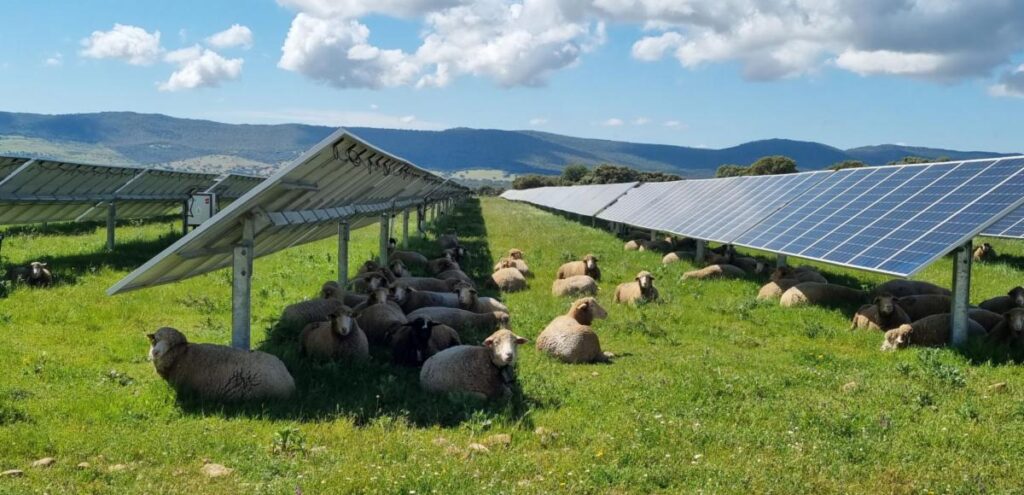
The speakers are Dan French, Founder and Executive Producer of the Solar Farm Summit, and farmer Sarah Moser, a researcher in agrivoltaic logistics at the Ohio State University. She is a leader in solar and storage project development and partnership with Ohio communities.

Advocacy briefings are compiled by Ariel Miller, a longtime community advocate and member of Ascension & Holy Trinity, Wyoming. Connect with her at arielmillerwriter@gmail.com
