
by Ariel Miller – Ascension & Holy Trinity, Wyoming
In 2019, the murder of a 16-year-old Guatemalan boy on the US border shocked parishioners of St. Mark’s, Upper Arlington who had been welcomed and befriended by Guatemalans during a series of mission trips to Guatemala over the preceding decade. Led by Joyce Acton, mission trip veterans formed St. Mark’s Migration Ministry to raise awareness of the perils endured by immigrants seeking safety in the US, and to discern how parishioners could help.
What they learned moved the parish to put neighbor-love into action in difficult but deeply-rewarding ways. St. Mark’s is now simultaneously helping two families–one from Mexico and the other from Colombia– to build new lives in Columbus. That means showing up and standing with these families in myriad practical ways, from figuring out a bus route to finding an immigration lawyer.
“Our rector, Vicki Zust’s message every Sunday is that following God is all about love, helping our community. And our community is everyone,” says attorney Elizabeth Anstaett, current chair of St. Mark’s Migration Ministries.
As they struggle with the newcomers to surmount many challenges, parishioners are starting to see Columbus through their neighbors’ eyes. For example, the American members now realize that an errand that takes ten minutes by car can cost some two hours to make it by bus.
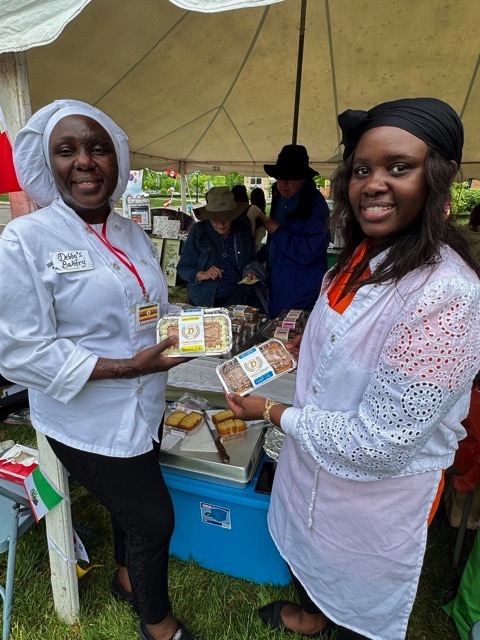
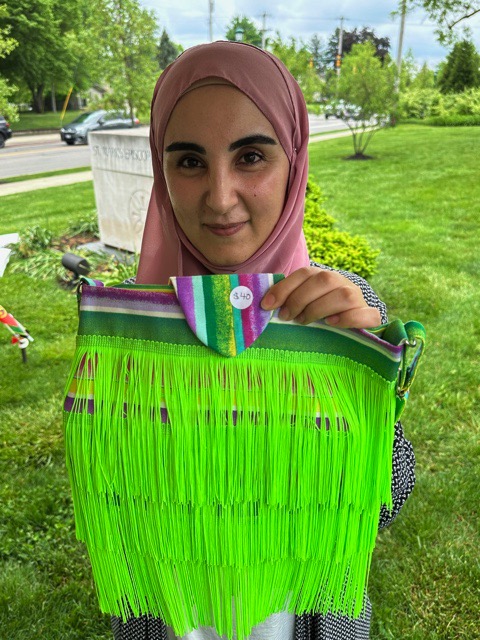
The parish has built a vital partnership with the City of Upper Arlington to put on an annual Culture and Artisans Fair providing immigrants from many countries an opportunity to sell their creative work.
“Upper Arlington is not a particularly diverse community but it’s close to the university and they are very interested in becoming a welcoming community for a wide range of people,” says Anstaett. The city contributes grants and marketing expertise and the parish, Anstaett adds, “is mobilizing the city to be the kind of community it wants to be.”
Through this event, the church and the city are opening the eyes of the wider community to the talents of immigrants from many countries, fostering respect and friendship. This year’s fair drew over 1,000 shoppers, enabling the 20 participating artists to collectively make over $9,200. St. Mark’s provided tables, chairs, cashier service, and paid for credit card processing fees so all the proceeds went to the artists.
Befriending these newcomers has “put a face on the immigration issue,” says Anstaett. That’s more crucial than ever. The bomb threats following President-Elect Trump’s baseless allegations about Haitians who are living and working legally in Springfield are just one example of growing animus against immigrants, both legal and undocumented.
“The current environment seems to have empowered some people to act badly,” Anstaett says. “The kids in both families have had bad experiences. The families want us to accompany them to new settings. Some people are kind, but they don’t know if others will react badly. When you have an older American lady with you, ” she adds with a rueful smile, “that provides some protection.”
“This is a church showing publicly what really should be the message of Christianity,” Acton says. “A different message seems to be prevalent in the culture.”
To inform themselves about the complicated dynamics of migration and US immigration policy, St. Mark’s invited speakers from CRIS (Community Refugee and Immigration Services), the official resettlement agency that serves Central Ohio. Joyce Acton attended virtual workshops provided by Allison Duvall of Episcopal Migration Ministries.
Now retired, the Actons spend part of each year in Tucson, where they attend Grace-St. Paul’s Episcopal Church because of its active ministry with migrants. Joyce Acton has made several visits to the border, including the Casa Alitas migrant shelter in Tucson, where volunteer therapists offer asylum applicants ways to work through trauma by artistic expression, through Grace-St. Paul’s Artisans Beyond Boundaries.
In the spring of 2021, a member of the Grace-St. Paul’s Migration Ministry asked the Actons to help a Mexican family of six who had just received permission to enter the US to apply for asylum. The family had been living in hiding from the violence in Nogales, Mexico just south of the border, compelled to wait there 450 days for a visa under the Trump Administration’s Remain in Mexico policy. The father, a policeman from the mountains of Southwest Mexico, was targeted by a drug cartel whose members murdered his father and brother right in front of him. They pursued his teenage son in a motorcycle chase in which the boy suffered severe injuries.
A Columbus family had agreed to sponsor their housing costs for up to a year, but the family faced a huge array of other challenges. “Three of us went to meet them,” Acton says. “This family was really traumatized. I will never forget the look of despair on their faces.”
The policeman, his wife, and four children aged six to twenty arrived with nothing but a backpack. St. Mark’s parishioners gathered furniture, clothes, and household supplies, and started the struggle of connecting them to health care, English classes, school, legal representation – for which they had no money – and working through the bureaucratic nightmares of applying for social security numbers, work permits, and asylum.
“We had no idea where to start,” Acton recalled. “There was no central resource for asylum seekers,” who arrive without any privileges beyond their visa. This is in marked contrast to refugees, who are able to get social security numbers and work permits immediately because they’ve been accepted by the US after exhaustive vetting by the UN.
The Mexican family had nothing but I-94 papers paroling them into the US because they had demonstrated a credible case to apply for asylum. None of them spoke English when they arrived. “We didn’t know how to access the resources in the beginning. You can’t do anything without an ID,” says Acton. “It was very hard to get records from Mexico. They came not having had good medical care. The kids couldn’t get into school without vaccinations.” It took eight months before they received work permits.
Now, just three years later, the oldest son is working in construction with his father. The three younger children speak English well, and two are in community college. The parents attend church faithfully every Sunday even though they don’t yet speak English.
Despite the many challenges, ” the parish is incredibly supportive of all these activities,” says Anstaett. “They really want to help people and they want to be involved in addition to giving money. Several parishioners have begun volunteering at ESOL programs. I have never heard anything but positive feedback. Every time we ask for something, we get more than we ask for.”
Thus, this year when CRIS asked St. Mark’s to help a Colombian family who had been granted refugee status and placed in a nearby house, the parish said yes. Was there any hesitation? “No,” says Acton. “The questions we got were ‘what do they need’ and ‘how can we help?’ We only had a few days’ notice. We set up a place in the parish hall and things began rolling in. We had a caravan of cars taking these to their new home.
“This family left Colombia because their son was being recruited by a paramilitary group. On the way, their situation got worse. They came through Ecuador and it appears to have been horrendous. They were very emotional when they saw how we were welcoming them.”
“When you interact with these families, it’s life-changing,” says Elizabeth Anstaett. She laughs as she describes attending a baby shower hosted by the Colombian family recently. “They seem to have a big social network. There were 30-40 people, very raucous and vocal. Neither Joyce nor I speak Spanish. It was probably very good for us to experience being in a minority!”
“This has become a truly personal relationship,” said Action.
That same week, she and a Mexican family would be meeting with their immigration attorney. “They were recovering emotionally but now are really worried about the situation, post-election,” she says.
As St. Mark’s and their immigrant friends wait together for what comes next, the parish stands steadfast in this most tangible experience of faith-in-action. “I encourage other congregations to reach out to immigrants,” says Anstaett. “It has been nothing but positive for our parish.”
